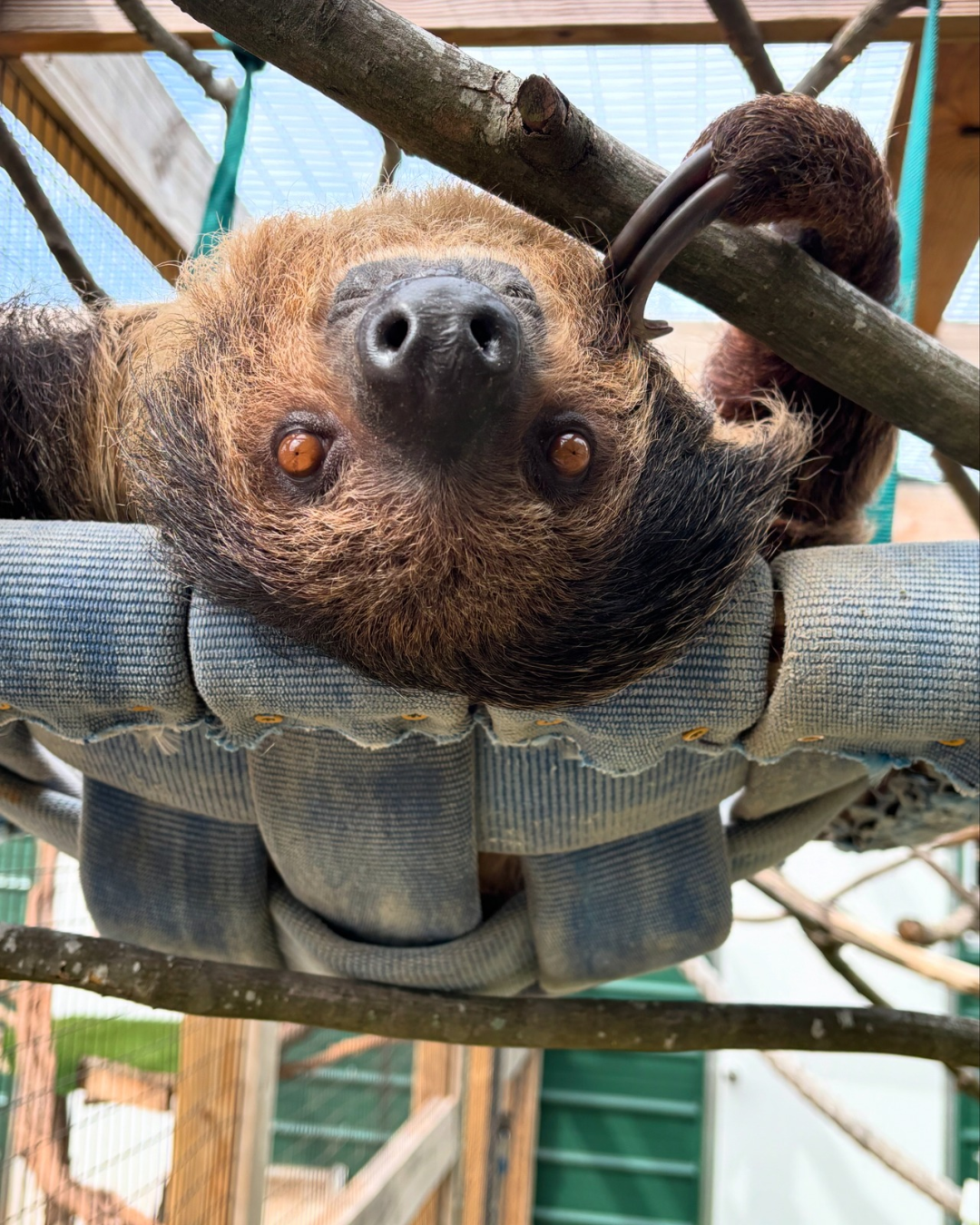
The Magic of Estivation
10.15.2026
Every fall, people talk about hibernation. Bears denning up, groundhogs going quiet, the animal kingdom collectively deciding it has had enough of winter and clocking out until spring. It is a genuinely fascinating process, and it gets plenty of attention. But hibernation has a lesser-known counterpart that is every bit as extraordinary, and it happens in the heat rather than the cold.
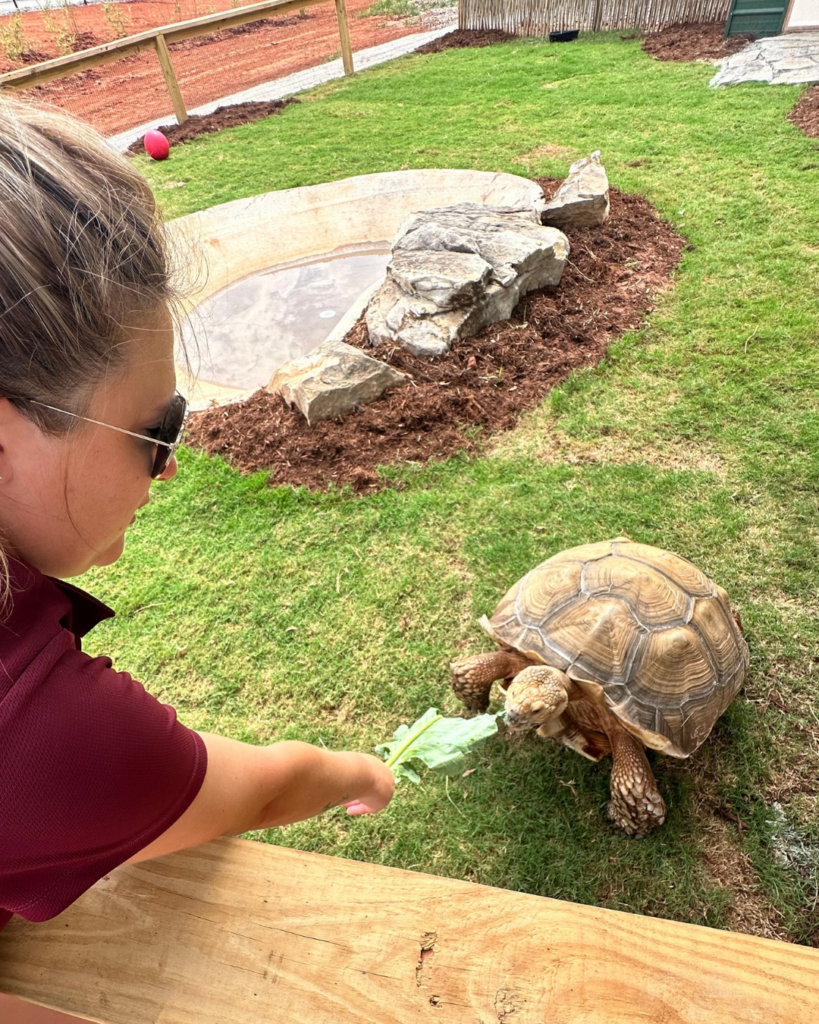 Estivation is, in the simplest terms, what happens when an animal faces the opposite problem from winter. Instead of surviving cold and food scarcity, estivating animals are managing brutal heat and drought, and the African Spurred Tortoise, like our lovely Zee at Georgia Safari Conservation Park, handle it better than almost anything else alive.
These tortoises are extraordinarily capable burrowers. Using their broad, powerful legs, they excavate burrows that can stretch many yards in length, reaching down to cooler, moister soil well below the scorched surface. Once inside, their metabolism slows, their activity drops to almost nothing, and they wait. They can survive for weeks without food or water in this state, their bodies drawing on stored resources with a patience and efficiency that took millions of years to develop. When the rains return and temperatures fall back to something livable, they emerge.
It is the same core magic as hibernation, just seasonally flipped. The body reading the environment, making a calculation, and choosing stillness over struggle. For an animal that can live well over 50 years, that kind of long-game thinking makes a lot of sense.
The African Spurred Tortoise, or Geochelone Sulcata, is the third-largest tortoise species in the world, behind only the Aldabra and Galapagos giants, and it is currently listed as Endangered due to habitat loss and the exotic pet trade. An adult can weigh over 100 pounds and, once fully grown, has virtually no natural predators. They are slow, deliberate, and built for exactly the environment they come from. An animal this ancient in its design commands a different kind of attention and appreciation.
Fall is a great time to visit the park and see them out and active. Cooler temperatures mean more movement across the park generally, and the savanna has a different quality in October that is hard to describe and easy to appreciate.
The park is open daily from 8:30 am to 5 pm at 1761 Monticello Road in Madison, Georgia. Reservations are available at georgiasafari.com.